

Phatsaks and Nobnobbs
This may or may not be a true story.
Deep exploration of the planet’s crust has apparently unearthed two new humanoid species and revealed the unbelievable story of Captain Jak Elbalortnocnu, the most prominent Nobnobb of them all.

The Earth has existed for something like five billion years and in all that time there have been at least two other manifestations of life with intelligence similar to our own.
Before Homo Sapiens arrived about 400,000 years ago, the two previous manifestations were long gone, and most traces of their existence had been absorbed back into the Earth. Only now have we, the scientific community, been able to reveal astounding discoveries about these hitherto unknown humanoid species with the assistance of innovative technology and forensic research, freely available on social media. Some of the details are a bit hazy but it is obvious that both species failed, not by any external misfortune or unexplainable inter-stellar catastrophe, but due to the nature and stupidity of the species themselves.
Extensive research I conducted over a couple of weekends last summer has revealed, unsurprisingly perhaps, that both species bore a physicality comparable to our own. For example, their life-support systems, their vital organs, were situated within a framework of tissue and muscle supported by a complex structure of durable calciferous material. There was also blood, red and gloopy, although unlike ours theirs had the sweet taste and consistency of honey. In warm climates it was runny, in the cold it tended to harden, clogging many an artery. When this happened, the individual would suddenly enter a state of narcolepsy until they warmed up again.
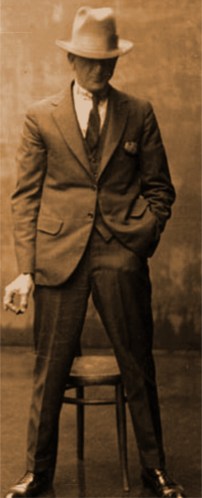
In the first manifestation (scientific name – Homo Pendulus. Generically referred to as Phatsaks), there were three sexes, Male, Female and Um. Males and Females performed pretty much as one would expect but the purpose of Ums is a little harder to fathom. Lumps of rock discovered in modern-day Mongolia suggest that Ums were more ornamental than functional. It seems they could stand rigidly still for weeks and sometimes months on end which goes some way towards explaining the lack of fossilised hat stands found at any site of archaeological significance. Current evidence indicates that Ums were completely useless although, as with all serious research, there is a caveat.

Professor Tid Li Po’s learned paper of 1807 provides some evidence that Ums may well have survived through the millennia into the present age where they apply their skills in furniture salesrooms all over the Western world. It is believed by many that some may have even become Presidents of the United States of America. As I say, it is purely conjecture but highly probable.
Phatsak brains were much larger than ours, around twice the size, although they appear to have used considerably less of their mental capacity than even we do now. Hard to believe, I know, but true. As it turns out, the bulk of their brains were reserved for aggression. As if this wasn’t bad enough, the entire species suffered from a chronic addiction to an “ecstasy” chemical secreted from the large intestine like an erupting volcano every time one of them bashed in the skull of another. Archaeologists working in what we now call Jordan/Palestine recently unearthed substantial evidence of ritualised death orgies where thousands were killed every year. It appears some of them may have even bashed in their own heads just to feel the “ecstasy” rush for a split second before keeling over. Again, strange but true. I should point out however that, strictly speaking, the skull is not where Phatsak brains were housed. Professor Tid Li Po’s second learned paper (published posthumously) points to it being hermetically sealed within a gelatinous sack that dangled over the shoulder like the kit bag of a regimental soldier. Phatsak heads, with nothing of any substance contained within them, were typically flat (apart from the ears and the nose), rather like a cereal box without the printing.


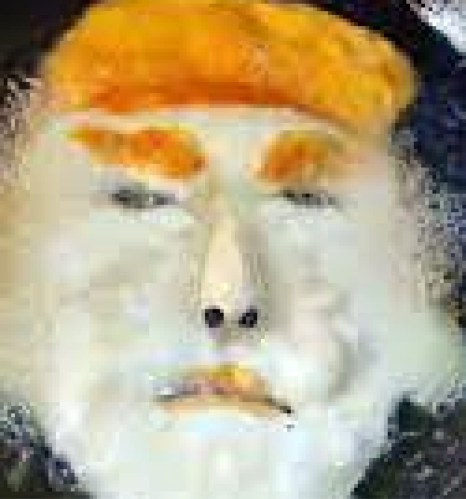
One can only hypothesise about the mass demise of Phatsaks, but the connection is hard to ignore between their predilection for smashing each other over the head with axes and their addiction to the “ecstasy” rush they experienced from doing so. The entire species wiped themselves out after about half a million years (with the probable exception of the Um sub-sex).
The second manifestation (scientific name – Homo Proboscis. Generically referred to as Nobnobbs) evolved and came to prominence almost 100 million years after Phatsaks killed each other off and long before Dinosaurs roamed the Earth. Physically, Nobnobbs were pretty much the same as us except everything about them was bigger – average height was 10 feet 6 inches, average weight was 500 pounds. They had big hair, big heads, massive noses and huge ears: big arms, size 22 feet and bulky legs. Males of the species also possessed an enormous sex organ. Unfortunately, Female sex organs were roughly the same size as Human Females today. This disparity in relative dimensions caused difficulties with reproduction because one instrument could not be fitted into the other without fatal injury.

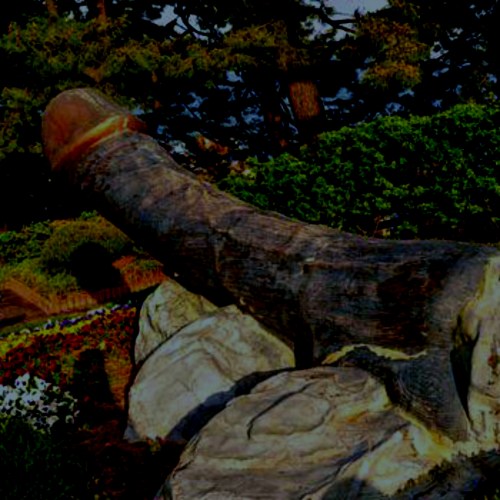
From almost the beginning of Nobnobb evolution, compromises had to be explored. After many, many premature speculations they settled on what we scientists now refer to as the Dartboard Method (see Sir Gustav Vankenshake’s paper of 1903). As far as we can tell from crusty old erotica discovered in the airing cupboard of a hotel at Palm Beach, Florida in 2022, the lady Nobnobb would arrange herself, undercarriage agape, and for a few hours or days, the gentleman Nobnobb would fire innumerable rounds of his wriggle juice at her from a safe distance. Judging by the more lurid illustrations, orgies were commonplace but frowned upon by Lifeguards who were often called upon to rescue some poor Nobnobb Female from drowning.
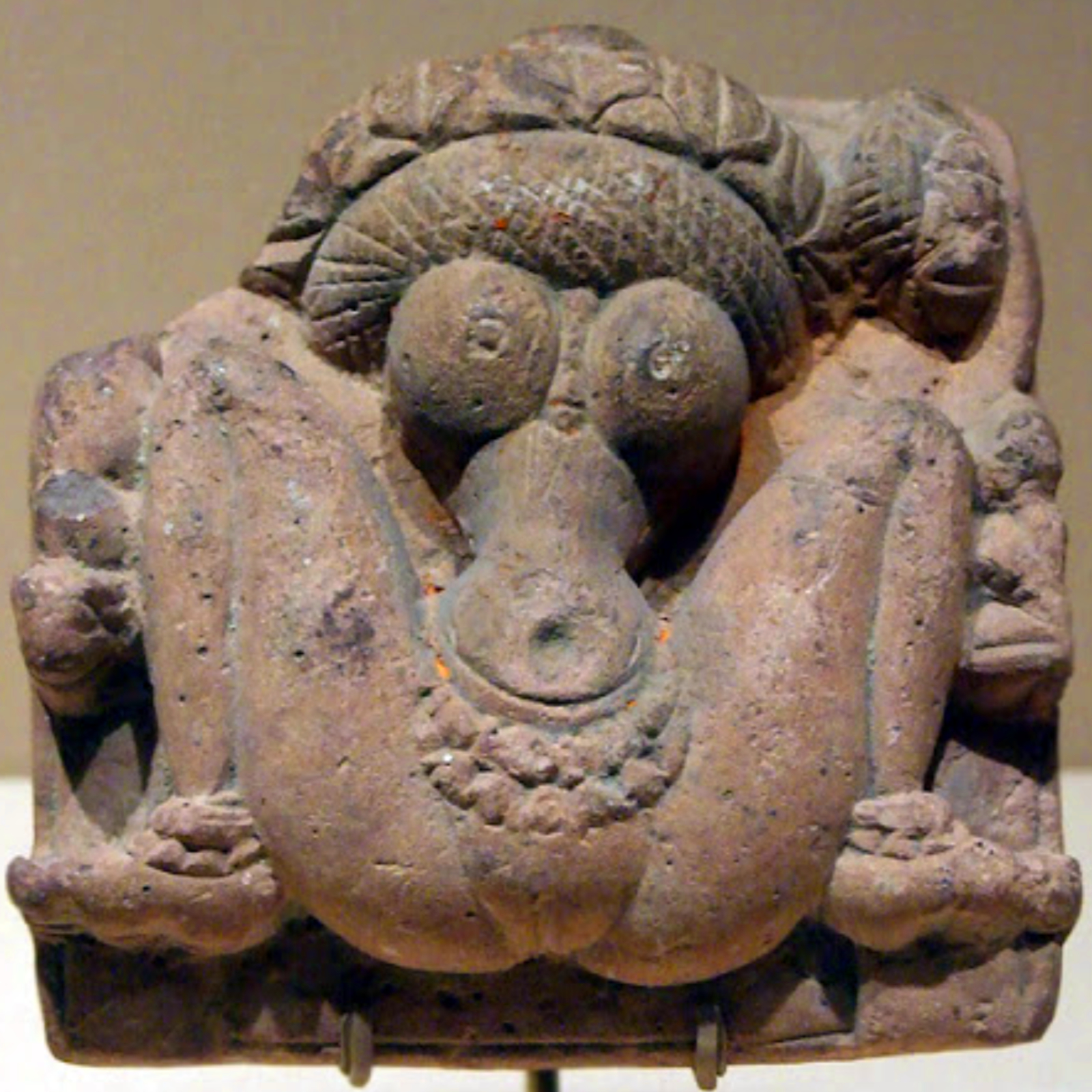
It was an imprecise method of reproduction but it worked for Nobnobbs who seemed to thrive as a species until they mysteriously vanished within ten years of the dinosaurs arriving. Sir Gustav Vankenshake proffered the idea that perhaps dinosaurs liked the taste of honey and consequently ate them all (see my earlier note concerning the characteristics of their blood).
Your typical Nobnobb definitely had a brain, it is just difficult to pinpoint where exactly in the body it was located. One theory, presented by eminent philatelist Baron Otto van Likke de Stampen at his groundbreaking lecture to the Royal Society in 1891, proposed that Nobnobb brains were disproportionately small but relatively powerful rather like a Black Hole in space which is minute in comparison to all the nothingness that surrounds it. In terms of functionality, we somehow know that it hoovered up information randomly, stored it away in no particular order and regurgitated it when needed, again in no particularly regulated way. Thus, the Baron asserts, Nobnobbs were able to apply all the right solutions to the wrong situations, in the wrong order and in the wrong ways. Nevertheless, they muddled through.
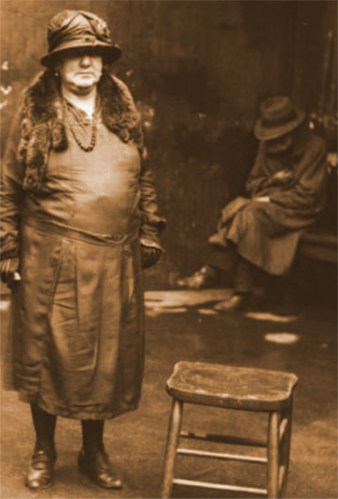
My theory is that their brains were a moveable feast, so to speak. Whilst I agree with Baron Otto van Likke de Stampen that their brains were undoubtedly small, probably the size of your average frozen pea, I would suggest a more credible assumption is that a Nobnobb brain floated around the body like an unmoored canoe, temporarily anchoring anywhere at any given time – today the liver, tomorrow a finger.
Inevitably this would have caused a headache due to the neural network having to constantly re-wire itself, nevertheless, this is my conclusion based on many gruelling minutes of study. Neither do I have any problem accepting his theory regarding their thought processes or lack thereof but, and it’s a big but, several unheard Nobnobb sagas (available on HMV gramophone records) strongly indicate an innate ability for the species to wrestle chaos out of even the most ordered and tranquil of situations. In this regard, Homo Proboscis are not dissimilar to us Homo Sapiens and occasionally quite clever.
In my learned work, Nobnobbs: Obscure Mysteries of the Glaringly Obvious, deemed by many lesser mortals as “a masterpiece of unbelievable genius”, I explore the life and magnificent achievements of perhaps the greatest Nobnobb of all, the intrepid Captain Jak Elbalortnocnu. Quite remarkably, long before Homo Sapiens slithered into the world, he managed to accidentally solve the mysteries of just about everything, from mastering perpetual motion to the nutritional value of a fly’s ears. Not only that but he also stubbed his toe against many of the treasures we now take for granted – The Perfect Circle, The Stitch in Time, The Eternal Flame, The Tip of the Iceberg and The Last Word, to name but a few.
My work, as ever, is based on undisputed truth although I have taken the liberty of inventing some characters and situations for dramatic purposes.
Look out for the first instalment, Chapter One: Shooting Stars.
Linked:
Picture: Various sources
References: Twitter Facebook TikTok
© Rod McRiven 2020
 mcriven.com
What do you think?