

Civilisation in Britain is collapsing
British society is in chaos. Over the last forty years or so successive governments have destroyed or devalued every aspect of civilisation in this country. We now have the most corrupt politicians of any time in modern history1, the highest taxes in a century (4% higher than the world average)2, the highest level of financial and social inequality3 and, on top of that, we have leaders whose policies and moral incompetence have killed more than three times the number of civilians than WW1 and WW2 combined. When not exploiting ever more creative ways of plundering the national coffers for their own enrichment, they do nothing but bicker among themselves, preside over scandal after scandal, whilst leaving a diminished and beleaguered civil service to run the country. It is shocking and embarrasing. Societal collapse is imminent.
Never has there been a more pressing need to examine constructive strategies to transform and rebalance social order in our country. We must urgently re-examine: Education, Law, Enforcement and Justice, Welfare, Health and Security, Life and Death, Art, Technology and Commerce, and the Earth. 4
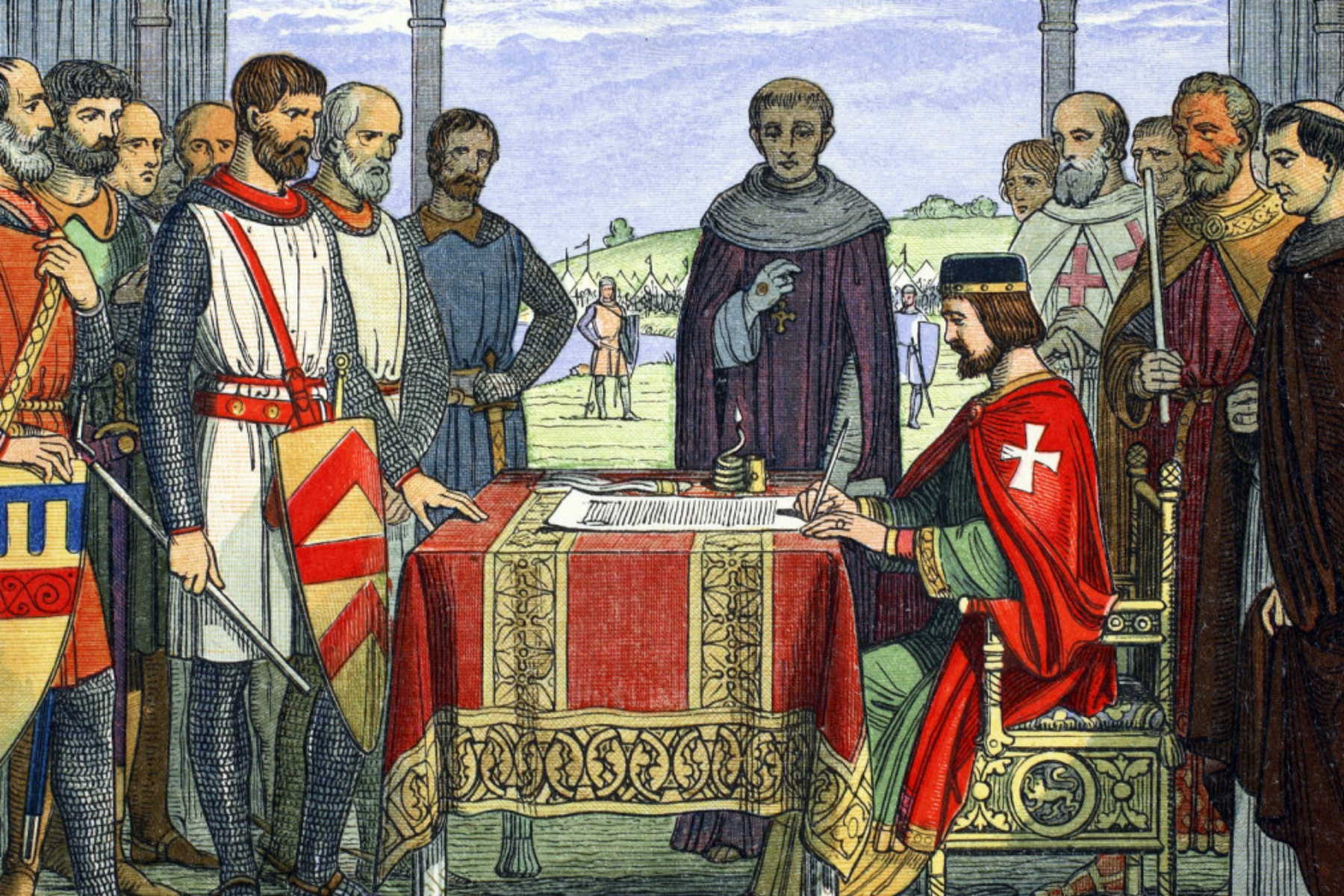
Throughout history, there are many periods when our country has been challenged, disrupted, and restructured, sometimes by invasion, at other times in response to natural affliction and occasionally through popular revolution. Over the last two thousand years or so, such events were often manipulated by powerful leaders to feed Christian religious empowerment. Over time, these kings, queens, politicians, and business leaders became progressively emboldened by an intrinsic belief in their divine right to rule while their primary ambitions were always to bolster and defend their elevated status, to enrich themselves and their supporters by skilful exploitation of a malleable population. Religion and politics have been tools for control, exploitation and containment rather than to enable and improve the lives of the masses.
This pattern persists today to such an extent that most of our politicians would rather preside over the destruction of our civilisation than lose one iota of their perceived power or one penny of their embezzled cash.

The citizens of this country should waste no time in setting up a forum to radically and forensically re-evaluate the worth of every part of Britain’s civilisation. And then, to use the power of the many to force much-needed change for the benefit of all.
1/ Society: Let’s explore ways to redefine and reinforce our collective purpose in the management of society. Areas to address will include, for example: democracy and the democratic system along with political accountability: the future of party politics, social economics and management of the economy. We should, perhaps, also consider whether capitalism has a place in any reformation.
Rather than the current system where taxes are gathered centrally and distributed downwards, should we consider whether our taxes would be better gathered and managed by regional communities with, say, a tribute paid to the state?
Additionally, we should take a hard look at our culture and the role of historic conventions and interpretations of past events. For example, does the desire to sustain our monarchy play to an emotional need rather than serve any valuable contribution to British society now and in the future?
2/Education: Surely, this is the heart of any sustainable reformation. Education, as distinct from Indoctrination, does not begin with toddlers in kindergarten and end with university graduates because human nature demands that education is a continuous process throughout life. As such, it is counterintuitive that formal education programmes should be constrained by any government’s transitory political ideology. Similarly, education, from cradle to grave, should be protected from the demonstrably flawed diktats of capitalism. Perhaps de-politicising education completely is the way forward.
Let’s question, for example, the validity of promoting redundant conventions and how history has been manipulated to foster cultural divisions and create false national identities. Surely, by doing so, we re-energise individual empowerment and thus, over time help to re-balance society. To achieve this end, people must be equipped with the skills to engage with the world around them on equal terms, to think for themselves, and be free to communicate thoughts and opinions without prejudice, constrained only by a universally accepted moral code. In all things, education is the key.
3/ The Law, Enforcement and Justice: We should explore the idea of documenting a universal moral code based on individual freedoms and rights – a revised and updated Magna Carta or Common Law. Enshrined within this should be a process for accountability which is one of the core principles that empowers democracy. There can be no Democracy without effective Accountability. It is an undeniable truth that no one, not even those who consider themselves to be superior to the majority, should be immune from being held to account or be above the law.
In an equitable, civilised, society justice should be freely available to all citizens, not just those who can afford lawyers. Perhaps we should consider what it would take to build a sleeker, undiscriminating justice system from the ground up (including national security, policing and enforcement).
Another point to consider is whether the process of creating and repealing laws should be made easier and faster. Without a doubt, a vast number of statutes and laws currently on the books are either duplicated, historically redundant or have been misappropriated by vested interests. They should be quickly gone.
Conceivably, as was the original intent with courts of law, policing and enforcement should also be separated from all political influence and, instead, be driven by established principles and exercised with the consent of citizens rather than controlled by political ideology and whim. This should be a fact, not an aspiration.
4/ Welfare, Health and Security: These are the reasons for the state to exist at all. “If the people cannot trust their government to do the job for which it exists – to protect them and to promote their common welfare – all else is lost.”– Barack Obama
Since its inception, Welfare (Beveridge report of 1942) has been misunderstood even though the declared intent was very simple – to be a safety net, a citizens’ safeguard, against ill-considered political decisions and wilful commercial malpractice. As such, on an individual level, one thing it is not is a gift from the state. Pensions, for example, are in reality an earned benefit where a proportion of a worker’s lifetime income should be regarded as having been invested on their behalf by the state and returned to that individual upon retirement.5 Perhaps there may be a strong case for moving the management of state pensions away from direct political control.
Employment benefits are often used as a weapon by politicians against those in need. It’s very hard to understand why this should be given that politicians are servants of the people and the people in need are very often in the situation they find themselves due to poor decisions made by those same politicians. The character of a government and a nation is judged by how it treats those who are less fortunate.
Perhaps drawing up a code of practice or a legally binding People’s Charter should be considered.
Perhaps we should also consider introducing a Universal Basic Income where everyone may benefit from the success of the nation and thus provide a single source of Welfare.
A robust and well-managed healthcare system is the single most defining factor of a nation’s strength and, without question, it is for the state to provide the means. In simple terms, the keystones of any healthcare system are Protection, Prevention and Treatment so, in this context, what do we want healthcare in Britain to look like at the point of delivery? Should healthcare be provided through the state or through private organisations or is there another way? What will be the impact on citizens should its provision be removed from the State? If it is, how should the increased personal financial burden be compensated? Should healthcare remain a national asset but separate from political control?
5/ Life and Death: In parallel to all the above, we should rethink our perceptions of who and what we are as human beings. What is our place in the world, in our country, and in our communities? Let’s examine attitudes to our own lives and the lives of others. For example, is the life of someone with whom we are familiar worth more than the life of a stranger? Should we value the quality of life rather than the number of years spent existing? How do we control the overpopulation of the Earth?
And death, is it to be feared or welcomed? Should we at least regard it as an inevitable part of living? What, for example, are the implications of our obsession with preserving and multiplying human life at any cost to the natural order?
This is a vast and complex subject from which it is extremely unlikely there will emerge a set of definitive answers. But, in the context of re-imagining Britain’s civilisation, we should at least begin to think about these things.
6/ Art, Technology and Commerce: We must reignite our relationship with Art and Technology. While most people understand that these disciplines both separately and jointly shape the world we live in, we could explore further how, with their often contrasting vitality, they can combine to create material phenomena greater than the sum of parts beyond the constraints of capitalism and privately financed initiatives.
7/ The Earth: Finally, everything we plan for must be enacted in the context of the elemental support which makes our existence possible. It is imperative that we re-establish our connection with The Earth (including sustainability, conservation and food security).
And finally, to help us, there is an abundance of extensively researched and intelligent papers written by journalists and other experts on the problems facing nation-states, communities, individuals and all humanity. Their voices are joined by many respected activists, thinkers, and academics from around the world however, it is astonishing that those with the power to make the required civic and societal changes fail to hear them and more often than not oppose them. As I say, the instruments that shape our society are badly broken.
Let us use all available resources to help us fix them.
Linked: It’s time for a revolution
© Rivenrod 2023
Pictures: Various sources (DM to take down) . . .
- https://www.transparency.org/en/cpi/2022/index/gbr ↩︎
- https://ifs.org.uk/articles/will-be-biggest-tax-raising-parliament-record ↩︎
- https://ifs.org.uk/living-standards-poverty-and-inequality-uk ↩︎
- The economy doesn’t make it onto the list for the simple reason that a successful economy is the product of a flourishing society, not the other way around. ↩︎
- Currently, National Insurance is treated as a part of the overall working tax take, to be spent in-year like any other tax. ↩︎

 mcriven.com
What do you think?